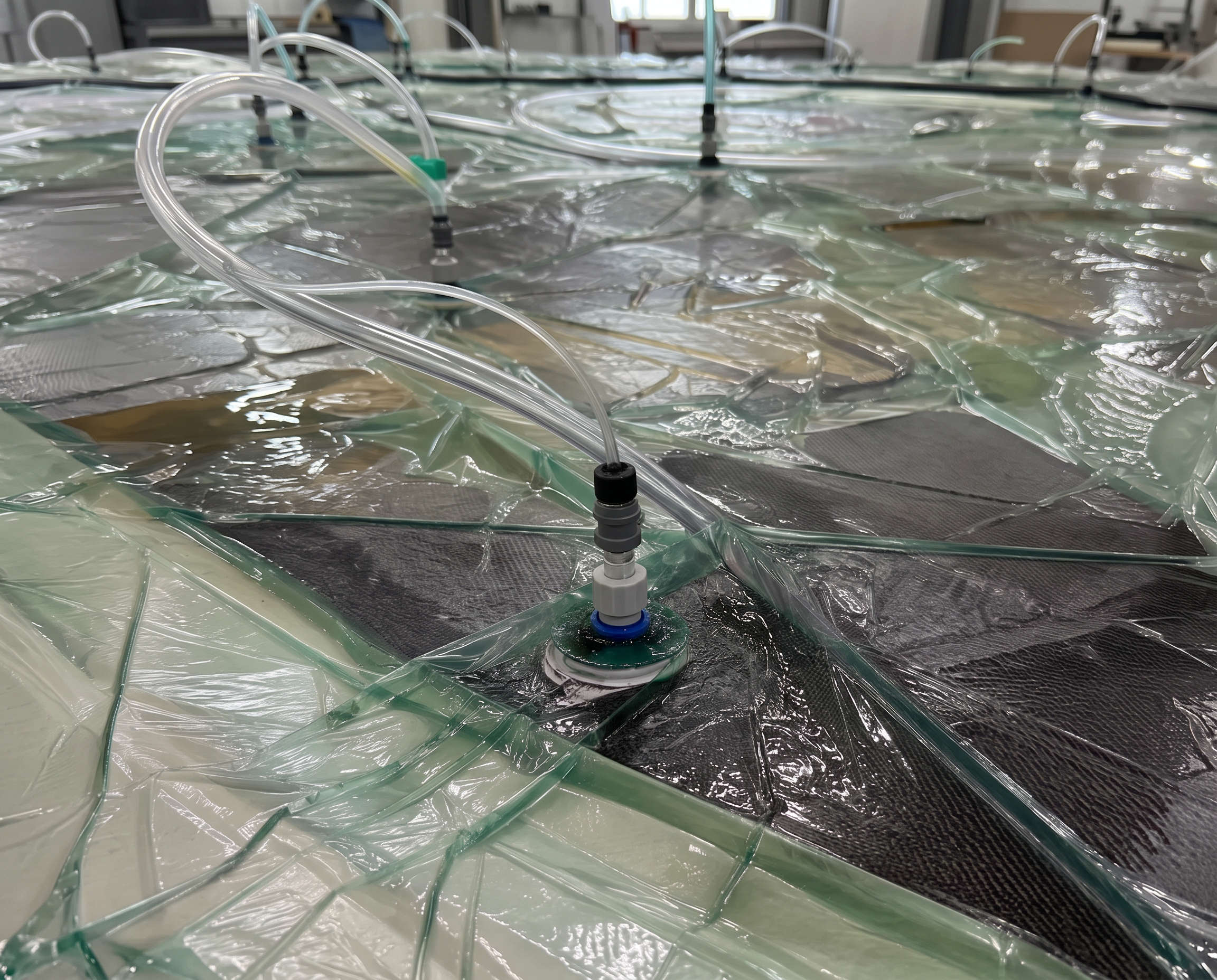
Advanced construction
Vacuum-infused sandwich composite enables an optimal strength-to-weight ratio, consistent lamination and a structure that resists fatigue at sea.

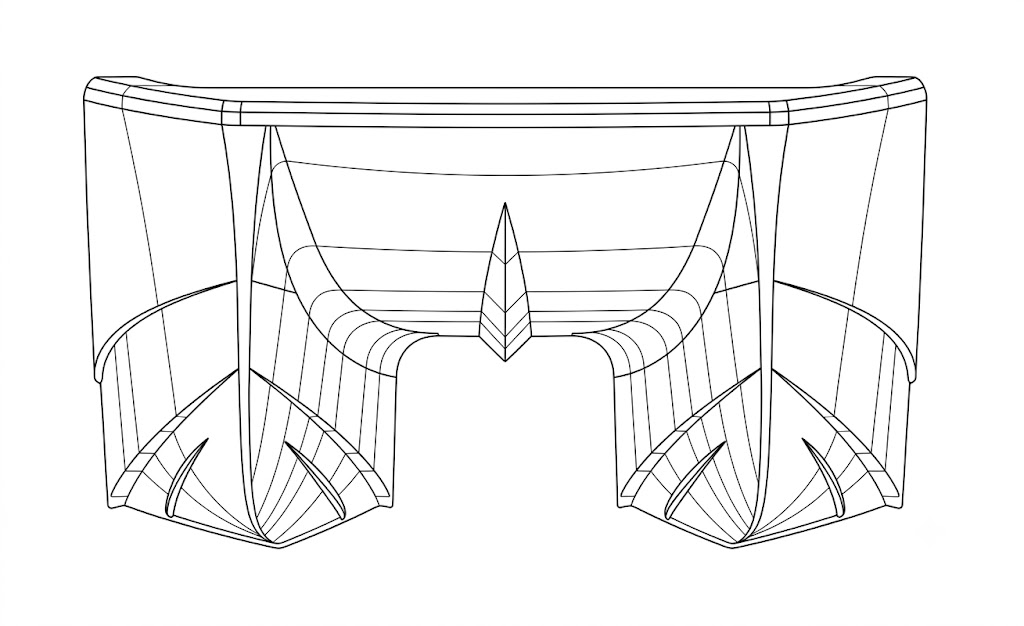
The hull integrates steps, strakes and an optimized tunnel to reduce wetted surface, generate lift and minimize slamming. The result is a more efficient, stable and comfortable platform.
We integrate a system of two steps in the hull that capture air from the sides and inject it under the stern. The boat glides on a thin layer of air instead of dragging against all the water.
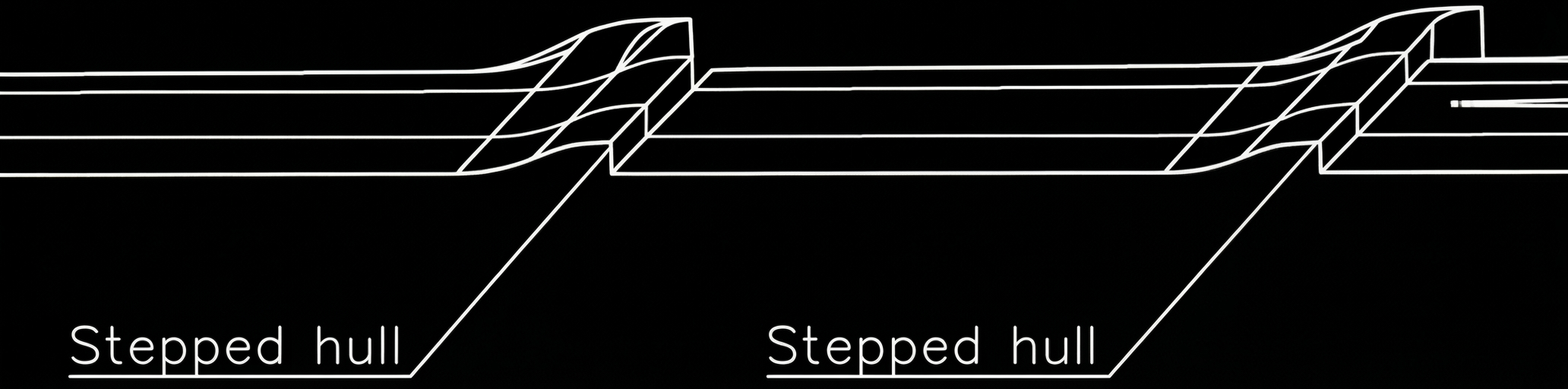
Less wetted surface, less friction. The boat needs less power at high speed, translating to lower fuel use and emissions.
The stepped-hull geometry is designed to reduce wetted surface at high speed and optimise the platform's dynamic behaviour.
Less pitch, fewer hull slams and softer landings. The synergistic deck reduces spray and improves visibility.
Designed to naturally hold its optimum trim without tabs or constant corrections. A geometry developed to deliver balanced behaviour in different conditions.
The hull geometry works for you.
The Mareva 32 hull is developed through an iterative process of naval architecture, hydrodynamic analysis and CFD simulation. Starting from a baseline geometry, each evolution is analysed and optimised before moving on to its physical validation.
Resistance analysis of the baseline geometry.
Iteration and CFD analysis of different hull geometries.
Study of behaviour in different sea conditions.
Sea trials on the first prototype.
CFD analysis of the Mareva 32's dynamic behaviour in a 0.8 m head sea.
The simulations are part of the Mareva 32 development process. The final performance and behaviour of the boat will be validated through sea trials on the first prototype.
What determines a boat's service life is rarely visible at first sight. From hull lamination to onboard electronics and the selection of every component, each technical decision behind the Mareva 32 pursues the same goal: reliability, confidence and effortless ownership for years.
Vacuum-infused sandwich composite enables an optimal strength-to-weight ratio, consistent lamination and a structure that resists fatigue at sea.
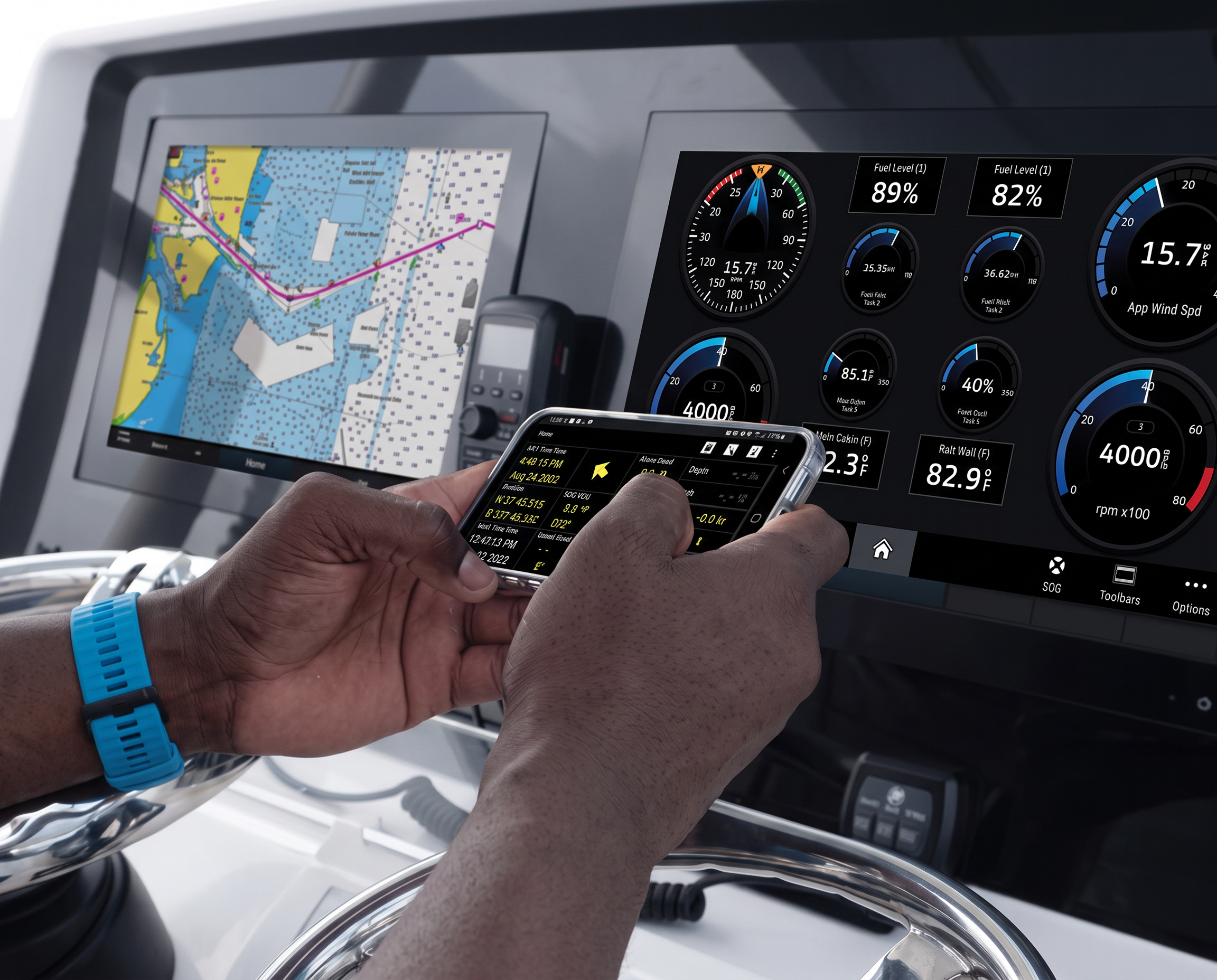
Digital switching, energy management and integrated systems allow intuitive control of the boat from the helm or from your phone.
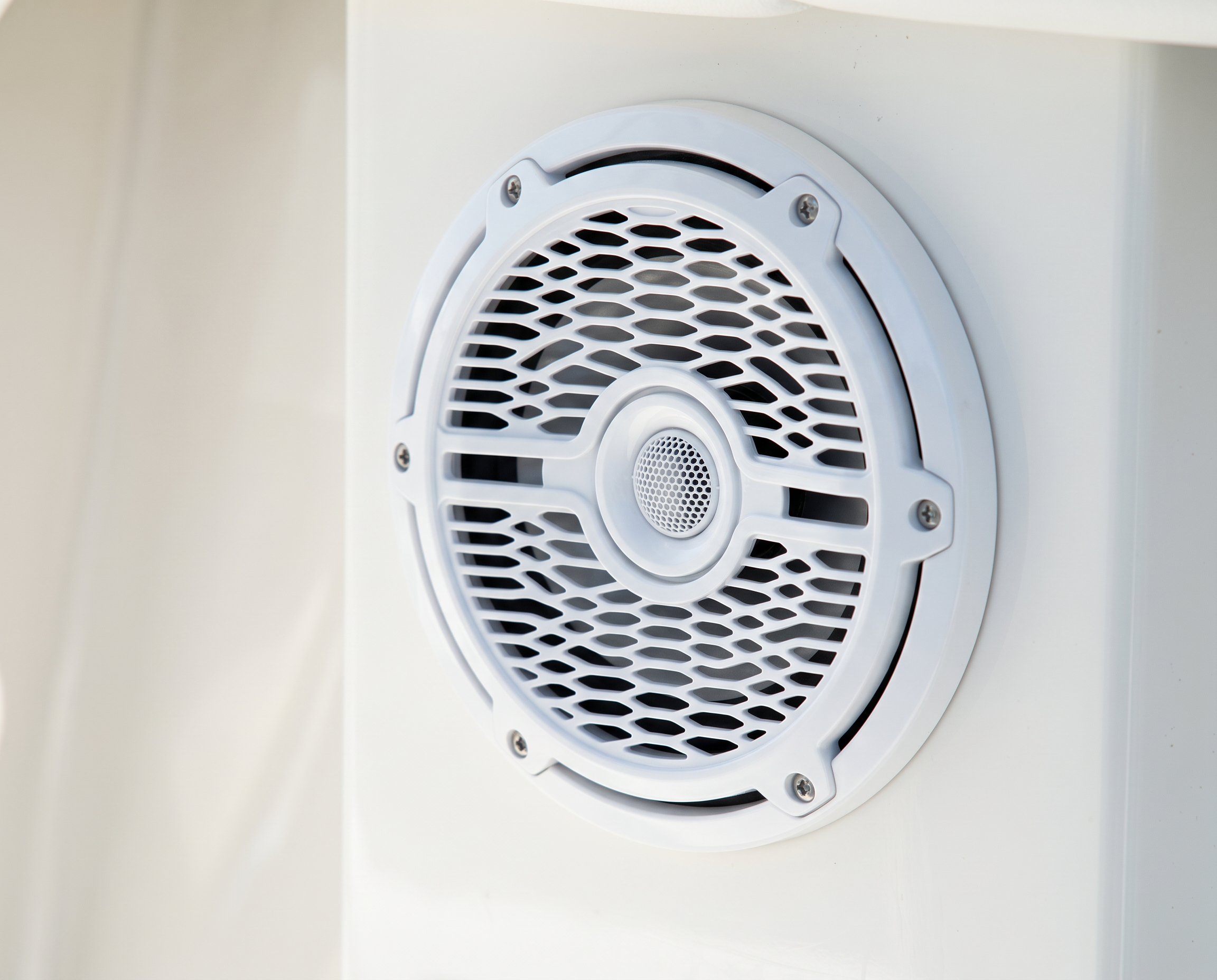
Marine components are selected for reliability, international service coverage and long-term spare part availability.
We don't just add solar panels. We integrate energy generation directly into the boat's structural composite.
Photovoltaic cells become part of the laminate itself, turning the hardtop superstructure into a surface capable of generating energy without taking up useful space, altering the design, or adding unnecessary weight.

The innovation is not developing a new photovoltaic cell, but integrating it structurally into a high-performance hull and proving it can withstand years of service in the most demanding environment: the sea.
Flexural stiffness, interlaminar strength and damage tolerance after impact. We measure the laminate with cells against the same laminate without them.
Salt fog, thermal cycling and prolonged UV exposure. The goal is to find failure modes in the lab, not on the water.
I-V curves at different angles, operating temperature of the embedded cell and response to partial shading, which is constant on a boat.
Electrical architecture, storage sizing and system protection in a marine environment.
Designed and developed in Bizkaia. Specialised manufacturing. Mareva integration and quality control. We select materials and processes for real-world use: years of salt-water exposure, thermal cycles, impacts and maintenance. Every structural decision balances lightness, stiffness and durability.
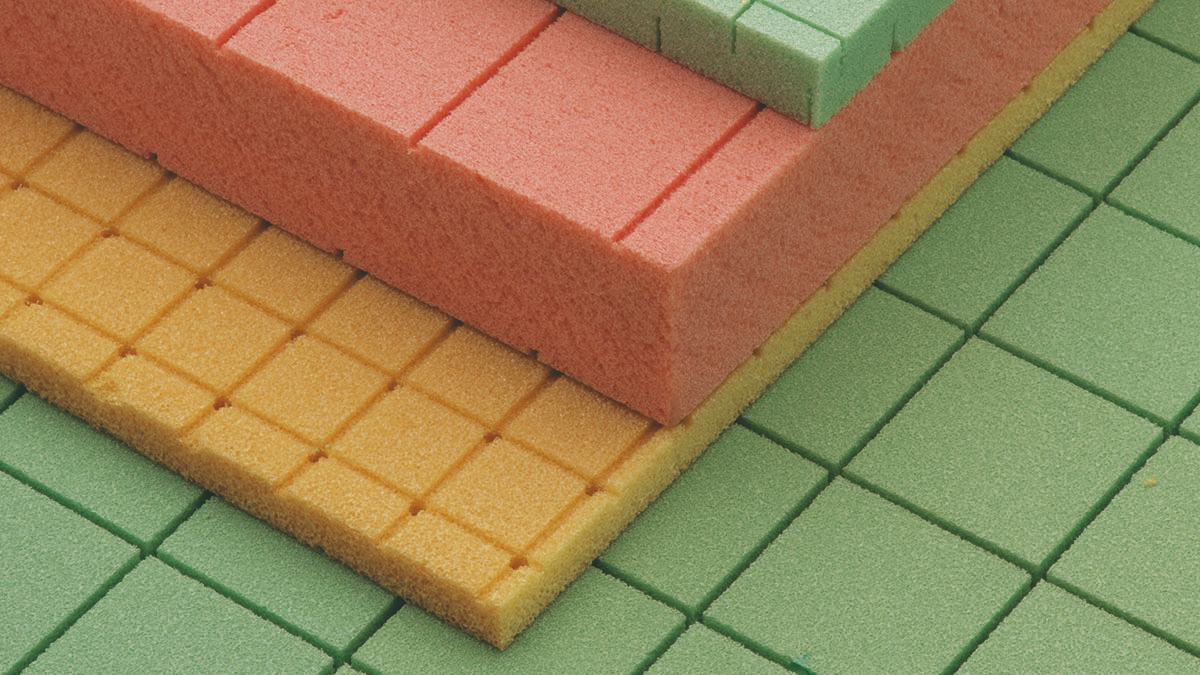
Reinforcements calculated by zone to withstand local loads without penalising overall weight.
Cellular materials selected according to each panel's stress: stiffness where needed, flexibility where it helps.
Equipment and layout designed for easy maintenance access and future upgrades.
Mould and assembly process defined by Mareva to ensure symmetry between both hulls and series quality.
Centre console
Pilot house
Charter
Preliminary specifications subject to change during development and certification.